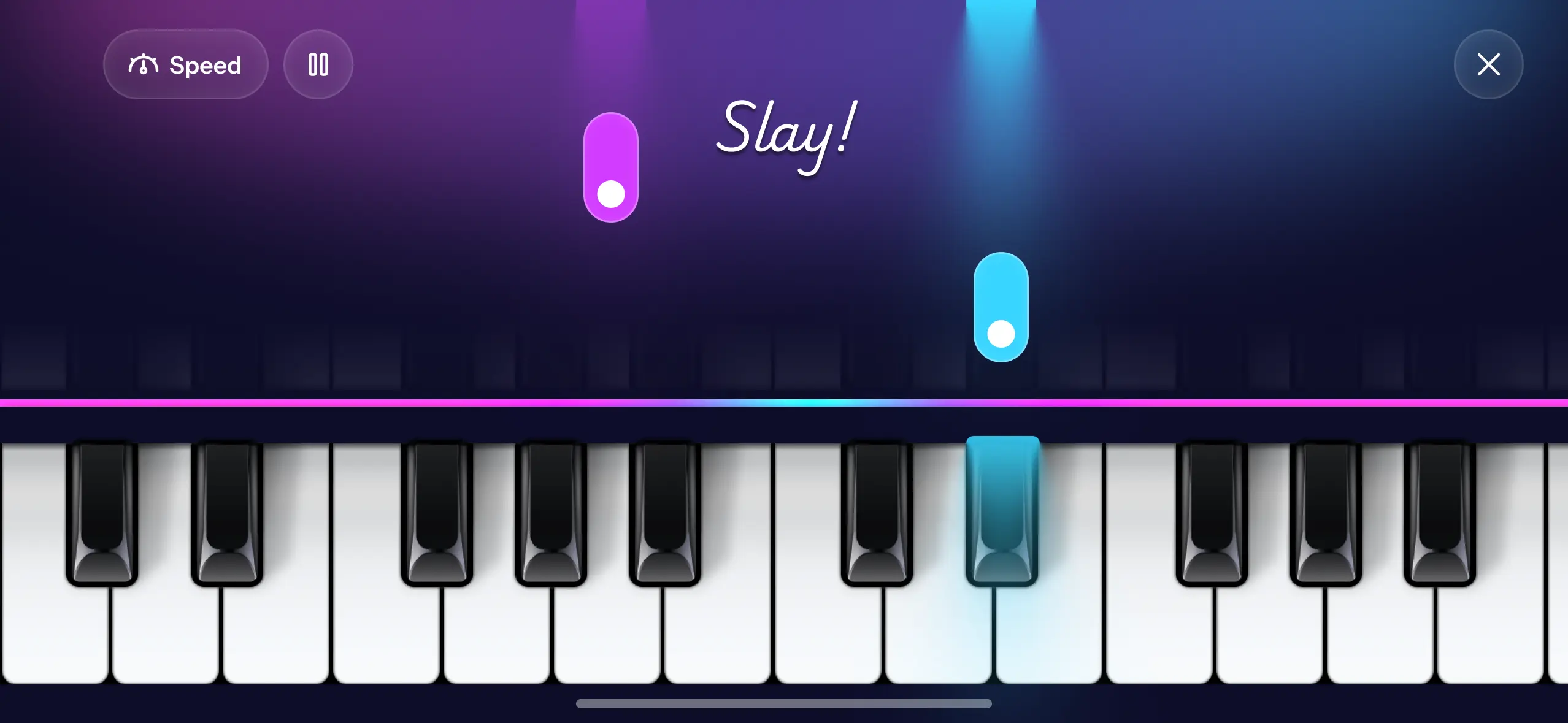
Yes, you can learn piano without reading sheet music. Reading notation and playing the instrument are two separate skills, and you can get years of real playing out of the second one without ever touching the first. Two methods work: playing by ear, and following falling notes that you press as they land. Falling notes are the faster start, and they let you play a recognizable chunk of a piece like Fur Elise or Clair de Lune in your first sitting.
Most people who quit piano didn't quit because of their hands. They quit because of the dots. Sheet music looks like a second language you have to learn before you're allowed to make any sound, and that wall stops a lot of people who would have loved playing.
Here's the part nobody mentions at the start: you don't actually need it. There are two ways in, and they suit different kinds of people.
Playing by ear
This is the old way, and it still works. You hear a melody, you hum it, and you hunt for it on the keys until it matches. The first few songs are slow and a little frustrating. Then something clicks, and you start to feel where notes live instead of guessing.
If you want to try it tonight, pick a tune you know cold, something like "Happy Birthday." Sing the first line, find the starting note, and move up or down one key at a time until each note matches what you're singing. You're training your ear and your fingers at the same time, which is the whole skill in miniature.
The catch is that playing by ear takes patience, and patience is exactly what a beginner is short on. If this is the route that appeals to you, how to learn piano by ear goes through it step by step. Otherwise, the second method comes in.
Following the notes as they fall
You've probably seen this even if you've never played. Notes slide down the screen toward a line, and you press the matching key as each one arrives. No notation, no theory, just timing and pattern. It feels like a game, which is the point, because your brain learns a song's shape much faster when it isn't also fighting with symbols.
This is how Piano Game works in Piano Aura. You pick a song, the notes fall toward the line, and you play them as they land. You can start a song on Easy and slow it right down while you're learning the movement, then bump it up to Medium or Hard once your hands know the way. There's a score and a streak counter if you're the kind of person that pushes, and you can ignore both if you're not.
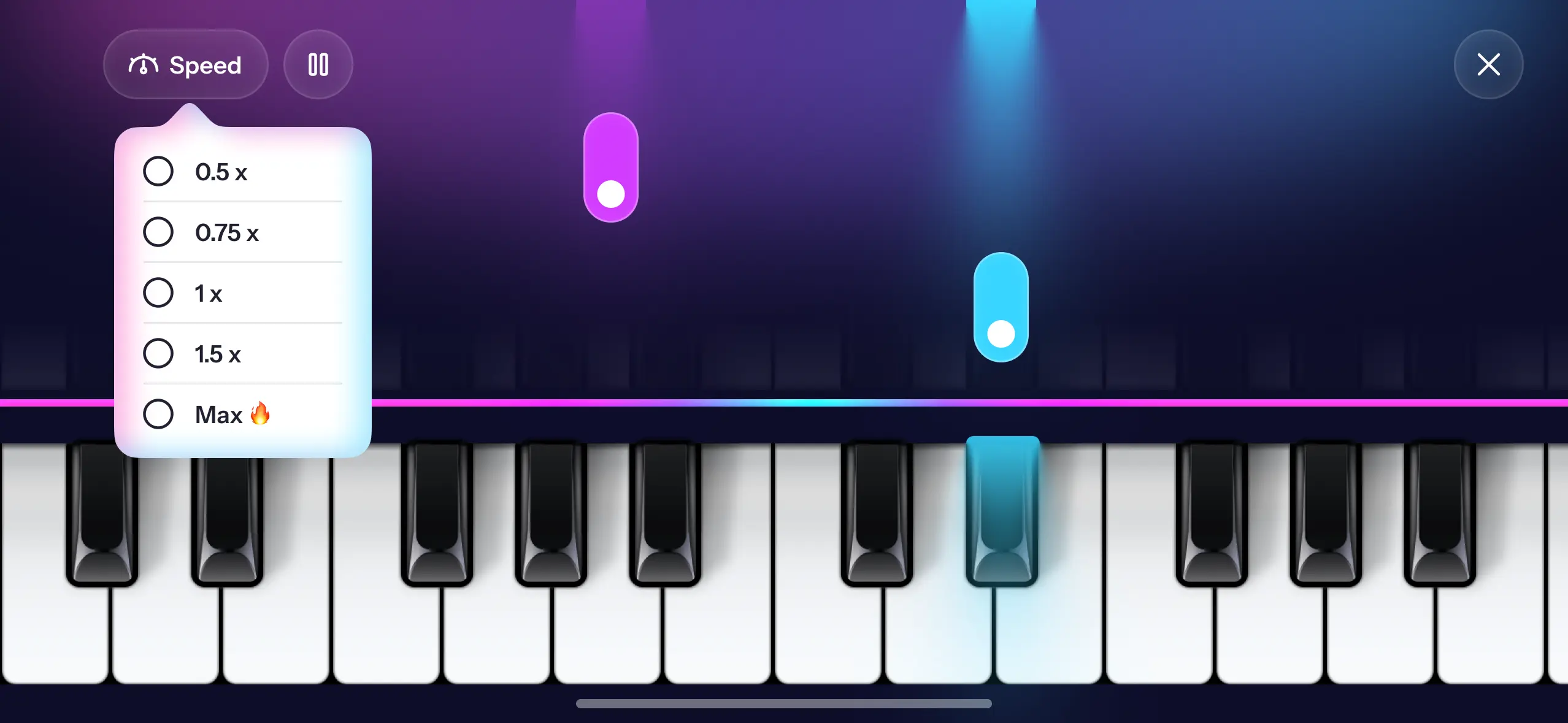
One small thing that helps more than it should: slow the song down before you speed it up. People try to play at full tempo on day one, miss half the notes, and decide they're hopeless. Drop it to half speed, get it clean, then let it get faster on its own.
What you actually cannot read yet
"I cannot read music" almost always turns out to mean something narrower than it sounds. Most people who say it can work out that a note sitting on the bottom line of the treble staff is an E, given a moment. What stops them is the other half of the page: how long each note lasts, and how two rhythms fit against each other in the same hand.
That distinction is worth knowing before you pick a method, because the two above handle it very differently. Playing by ear hands you duration for free. You already know how the tune goes, so your ear will not let you hold a note twice as long as it should be. Falling notes work the other way round. A falling note tells you exactly when to strike a key and says almost nothing about how long to keep it down, so you can finish a song in Piano Game and still not know that its last chord was held for four beats.
Neither is a defect, and neither is the version of "can't read music" people worry about. It does mean that if written music is somewhere on your list, the part worth studying is note values, rests, and dotted notes, rather than the note names. The names are an afternoon. The rhythm is the actual skill, and it is the one that keeps catching people out years later.
When to speed a song back up
Slowing a song down is the easy half of that advice. Knowing when you have earned the next speed is the half nobody tells you, and it is why people sit at 0.75x for weeks, or jump straight to full tempo and fall apart.
Three conditions, and raise the speed only when all three hold. You can play the song start to finish without stopping to think about what comes next. You are no longer making the same mistake in the same bar. And the current speed has started to feel slow. That last one does most of the work, and it is the one people ignore: boredom at a given tempo means your hands have stopped needing the extra time, and staying there is just rehearsing the slowness.
Then move one step, not two. Piano Game's speed steps run 0.5x, 0.75x, 1x, 1.5x, and Max, and the gap between neighbours is small enough that a clean pass at one usually survives the next. If it does not, drop back a step for a couple of passes instead of grinding away at the speed that broke.
Is this "real" piano
Worth being straight about this. Falling notes teach you to play songs. They don't teach you to read music or to sight-read something new on the spot. If your goal is to sit down at any piano with sheet music in front of you and play it, you'll eventually want to learn notation too.
But that's not most people's goal. Most people want to play songs they love, make something up, and enjoy an hour at the keys. For that, skipping the notation wall is not a shortcut. It's just a different, perfectly good door in.
FAQ
Can you really learn piano without reading music? Yes. Reading notation is a separate skill from playing. You can learn songs by ear or by following falling notes and get years of enjoyment without ever reading a staff.
Is playing by ear or following falling notes better? They suit different people. Playing by ear builds a deeper feel for where notes live, but it takes patience. Falling notes teach you a specific song fast and feel like a game. Plenty of people use both.
Is it rhythm or note names that trip people up? Almost always rhythm. Working out that a note is an A takes a moment. Working out that it is a dotted quarter tied over a bar line is what stalls people, and it is also what makes two hands sound ragged against each other. If you do plan to read music eventually, start with note values rather than note names.
How do I know when to increase the speed? When you can play it end to end without thinking ahead, you have stopped missing the same bar, and the current tempo has started to feel slow. Then go up one step, not two.
Will I still need to learn to read music later? Only if your goal is to sit down and sight-read any score on the spot. To play songs you love and make your own music, you can skip notation entirely.
How long until I can play a song this way? Faster than with notation. Following falling notes, a recognizable chunk of an easy song can come together in a first sitting or two. Playing fully by ear takes longer, because you are training your ear and your fingers at the same time.
What songs can I start with? Pick something you know cold. In Piano Aura's Piano Game you can start with copyright-free pieces like Fur Elise, Clair de Lune, or Greensleeves on Easy, slow them down while you learn the shape, then speed them up. Easy piano songs for beginners that sound impressive has more starter pieces, and the best free piano apps for iPhone covers more ways to start without paying.
Do I need a real piano, or can I do this on a phone? A phone or tablet screen is enough to learn where notes sit, follow falling notes, and get songs under your fingers. It cannot teach you key weight or dynamics, so add physical keys when technique becomes the goal.
Do I need to learn chords instead? Chords are a useful third route, and they are quicker to learn than notation. Knowing four or five shapes lets you accompany a lot of songs. The beginner piano guide covers where chords fit alongside melody.
How long before this actually sounds good? Following falling notes, a recognizable chunk of an easy song comes together in a sitting or two. Sounding settled to a listener usually takes a few months of short, regular practice, which how long it takes to learn piano breaks down by stage.
Skipping notation is not a shortcut, just a different door in. Piano Aura is free on the App Store if you want to open that one and see how far the falling notes take you.