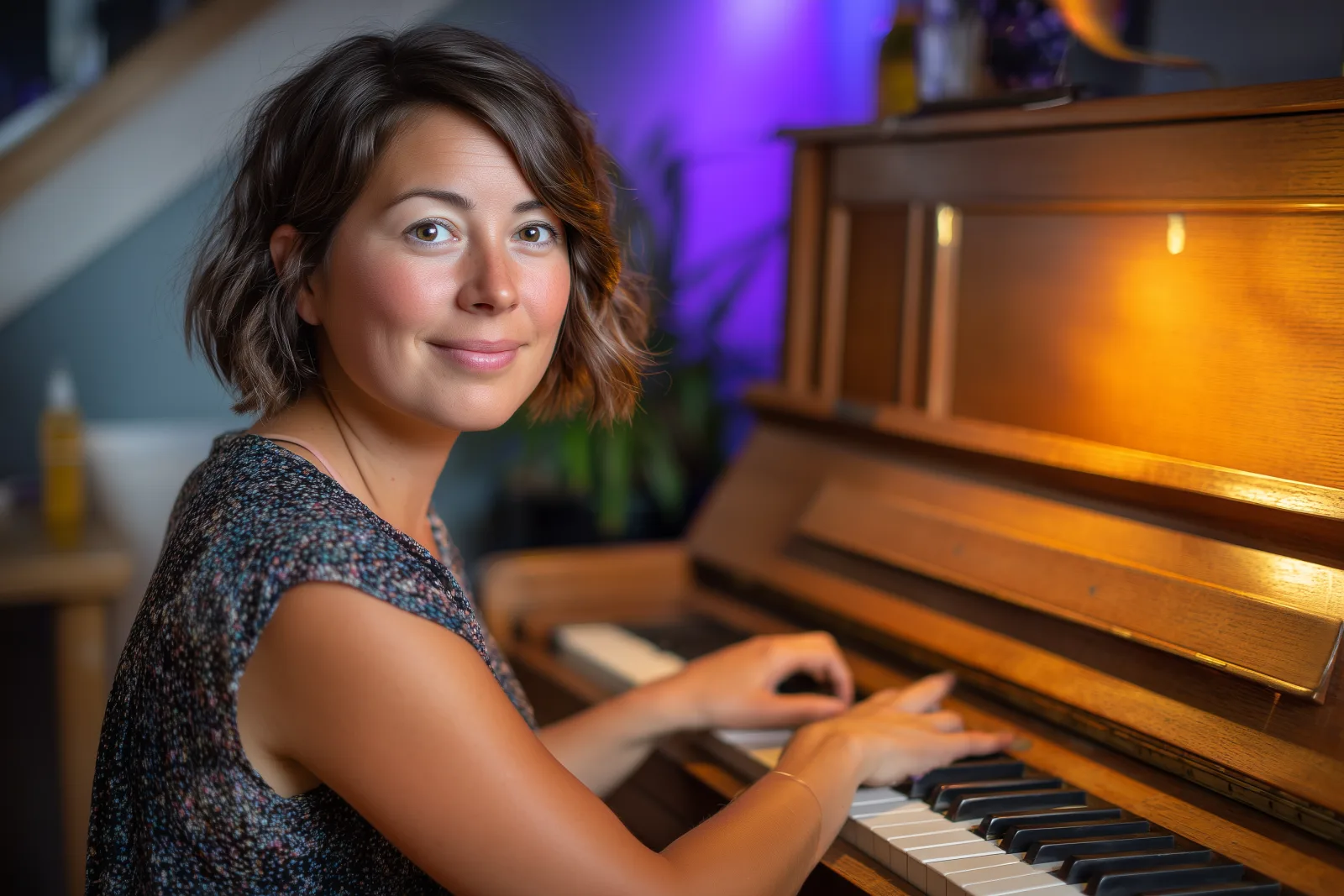
If you're an adult thinking about learning piano, you've probably already told yourself the discouraging version: that you're too late, that you should have started as a kid, that your hands are past it. None of that holds up. Adults learn instruments all the time. You learn differently from a seven-year-old, and in a few ways you learn better.
What you've got going for you is context and choice. You know the music you actually like, you can decide to practice without being told, and you understand why something is hard, which makes it less maddening. What works against you is mostly time and self-consciousness, and both have fixes.
Drop the parts that made kids quit
You don't owe anyone scales, sight-reading, or graded exams. Those exist to standardize teaching, not because they're the only road to playing. If your goal is to play music you enjoy, you can spend nearly all your time doing exactly that and still get good.
So start with songs you love, not exercises. Motivation is the whole game for an adult learner, and nothing burns it off faster than a month of drills before you're allowed to play anything real.
Small and often beats long and rare
Fifteen minutes most days will take you further than a two-hour session every other Sunday. Hands learn through repetition spread over time, not through occasional marathons. A short daily habit also sidesteps the scheduling problem that sinks most adult learners.
This is where playing on your phone earns its place, because a keyboard that's always with you turns dead time into practice. A few minutes while the kettle boils genuinely adds up.
What if you played as a kid and lost it?
This is a different situation from starting fresh, and it deserves saying separately, because it feels much worse than it is. People who come back after a break, whether that is two months or twenty years, usually describe it as total loss: the pieces are gone, the hands do not go where they used to, and it reads as proof that the ability was never really theirs.
It almost never is total loss. The pieces you once played are stored differently from facts, and motor patterns you drilled for weeks do not vanish, they get slow to retrieve. That is why the first session back is the worst one by a distance, and why people quit during it. Coming back to a piece you used to know is re-finding it, not learning it from scratch, and it is normally much quicker the second time.
What helps is refusing to start with your hardest old piece. Pick something you used to play comfortably, not your best-ever showpiece, and play it slower than you think you need to. Slowing a song down is not a concession, it is how the retrieval works. If you have the tempo controls in Piano Aura's Piano Game, put a familiar song at half speed and let your hands catch up to something they already know; that early proof that it is still in there is worth more than a week of good intentions.
Then treat the break as over rather than as a debt to repay. There is no catching up to do, because nobody is waiting.
Let yourself be bad for a while
Adults hate being beginners, and that, more than any lack of talent, is the real obstacle. Everyone sounds clumsy for the first few weeks. Skipping the notation wall gets you to real songs faster, which is its own kind of fuel; there's more on that in how to play piano without reading sheet music.