Skip to content

Grand, electric, or upright: how to choose your piano sound

By the Piano Aura TeamUpdated
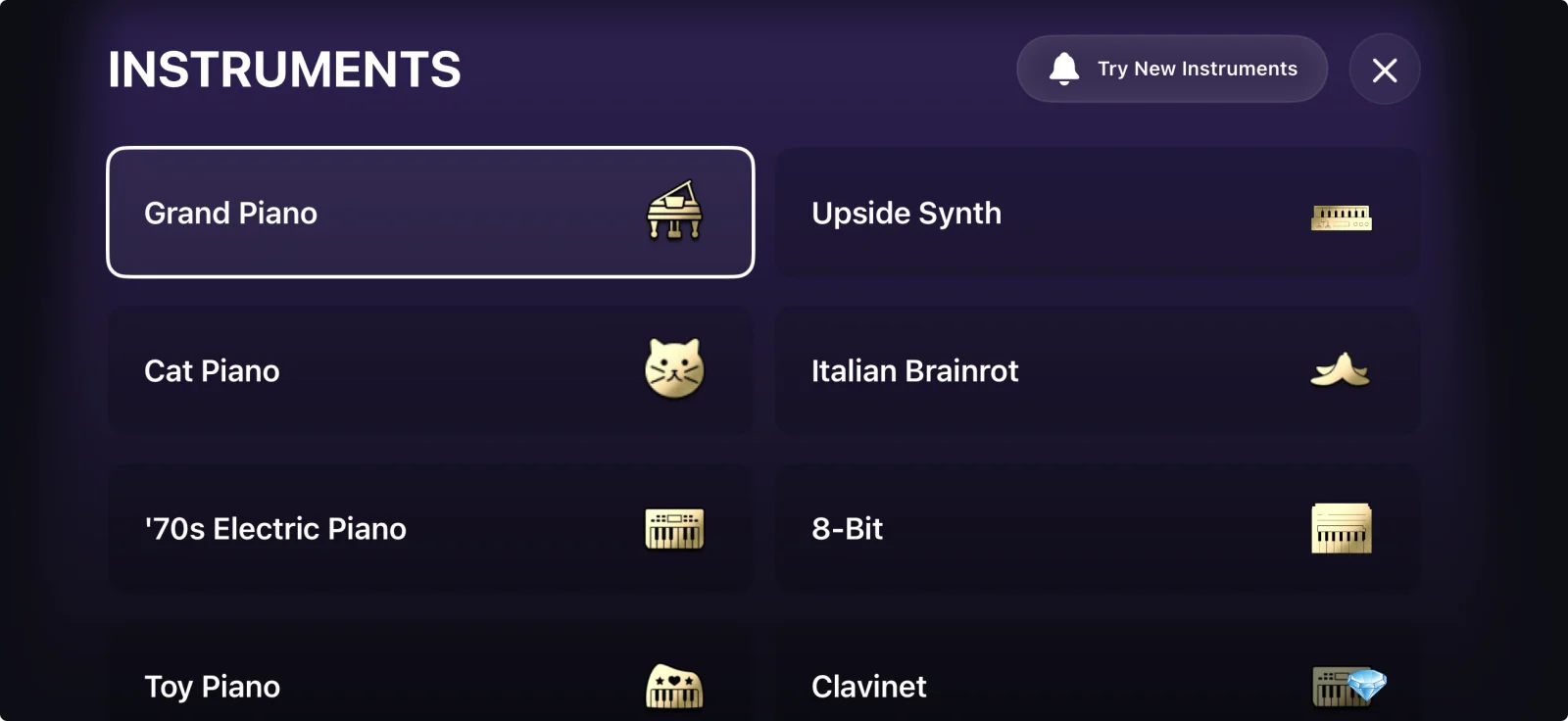
Piano Aura's instrument selector showing the available piano and keyboard sounds

You don't need to own a grand, an upright, and a vintage electric to work out which one you like. You just need to play the same thing through each and listen. The sound you choose shifts the mood of a piece more than most beginners expect, so it's worth knowing what each one is for.

Here's a quick tour of the main keyboard sounds and where they tend to fit.

Grand piano

The default, for good reason. Bright, full, and expressive across the whole range. If you want something to sound like a real piano, or you're playing classical, ballads, or anything where the piano is the star, start here.

Upright piano

Warmer and closer than a grand, with a slightly boxier character. Uprights suit quieter, singer-songwriter material, the kind of thing that sounds like it was played in someone's living room. If a grand feels too grand, an upright usually feels more honest.

Grand or upright: what actually differs

Plenty of people arrive at this question about the real instruments rather than the sounds, so here is the short answer. It is not the number of keys. A full-size upright and a concert grand both have 88.

The difference is geometry. A grand lays its strings and soundboard out horizontally, which lets the bass strings run much longer and gives the soundboard far more area to move air. A concert grand runs to roughly 2.7 metres for exactly that reason. An upright stands the same assembly on its end against a wall, so the strings are shorter and the box is smaller. Longer strings and a bigger soundboard are what people are hearing when they call a grand fuller, more resonant, and more capable of going from very quiet to very loud.

The action differs too, and it matters more than the tone for anyone playing fast. In a grand the hammers sit horizontally and fall back under their own weight, so repeated notes re-set quickly and quiet playing is easier to control. An upright's hammers move sideways and need springs to return, which makes rapid repetition a little less willing.

Then there is the ordinary stuff: an upright fits against a wall and costs less, a grand needs floor space around it and costs considerably more. Worth saying plainly, though, that a well-maintained upright in a good room beats a neglected grand in a bad one. Condition and room acoustics decide more of what you actually hear than the shape of the case does.

Electric piano

The mellow, slightly bell-like sound you know from soul, jazz, and a lot of lo-fi. An electric piano forgives a simple part. Play three slow chords on one and it already sounds like you meant it.

Organs

Sustained and steady, because the note holds for as long as you do. A pipe organ leans solemn and churchy; a rock organ leans gritty and loud. Either one is a fast way to make a plain progression feel bigger than it is.

Toy piano, xylophone, and synth

The character sounds. A toy piano makes anything feel like a music box, a xylophone turns a melody playful, a synth pushes it somewhere modern. Reach for these when you want a piece to be anything other than a serious recital.

The actual trick

Don't choose in the abstract. Play your idea, switch the sound, and play it again. The same little melody can sound thoughtful on a grand and slightly unhinged on a toy piano, and hearing that gap teaches you more than any description on a page.

Common questions

What is the difference between a grand piano and an upright? The strings and soundboard lie horizontally in a grand and vertically in an upright. That gives a grand longer bass strings, a larger soundboard, a fuller and more resonant tone, and a wider range between quiet and loud. Its action also repeats faster because the hammers return under gravity rather than on springs.

How many keys does a grand piano have? 88, the same as a full-size upright: 52 white and 36 black, spanning A0 to C8. Key count is not what separates the two. Smaller keyboards with 61 or 76 keys exist, but those are usually portable keyboards rather than acoustic pianos. If you want the note names laid out across those 88 keys, the beginner guide walks through them.

Which one sounds better? A concert grand in a good room is the ceiling, but that comparison rarely describes anyone's actual choice. Between a cared-for upright and a tired grand, the upright usually wins. Tuning, regulation, and the room matter more than the case shape.

Does the sound I pick in an app matter as much? For deciding how a piece feels, yes, and it is far easier to test. Switching from a grand to an electric piano takes a second, and the same three chords will suggest two different songs to you.

Piano Aura carries a deep library of these sounds and adds new ones every week, and you can switch instruments while you play and record, so auditioning all of them takes seconds. A few of the sounds are part of the paid plan. Once you've found one you like, recording it is a couple of taps away.

Piano Aura is free on the App Store if you want to hear the difference for yourself.

Keep exploring

Share